
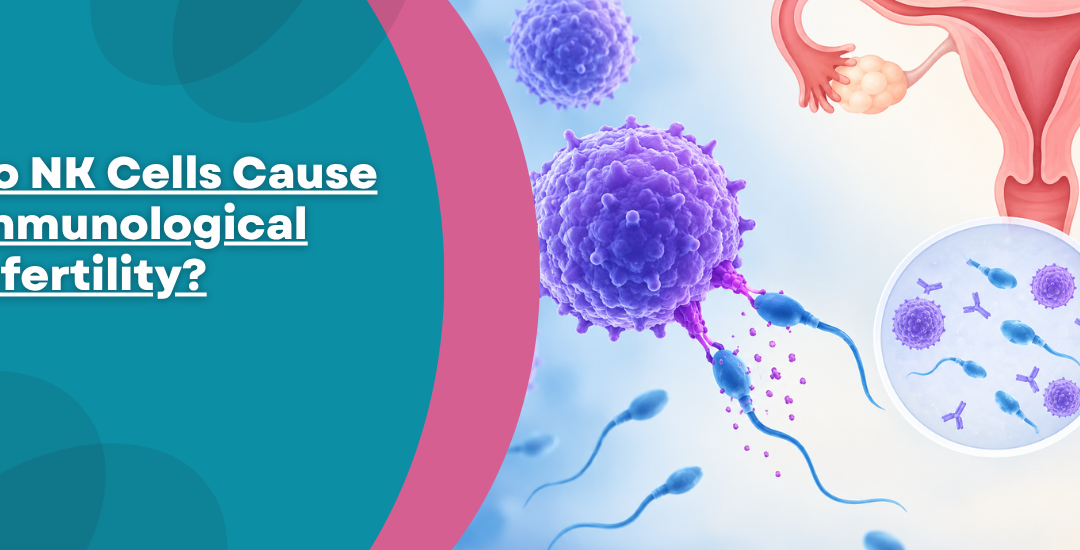
NK cells and infertility are linked in research, but there’s no proof that natural killer cells cause immunological infertility. Uterine NK cells support early pregnancy in the womb lining, whereas blood NK cells behave differently and don’t reliably reflect the uterus. Higher uterine levels have been reported in women with recurrent miscarriage and repeated implantation failure. That’s an association, not a diagnosis, and both testing and treatment remain debated.
According to Dr. Nisarg Patel, IVF Specialist in Ahmedabad at Nisha IVF Centre, “Natural killer cells have a bad reputation because of their name. In early pregnancy, they help the womb lining prepare for the embryo. NK cells and infertility usually come up after repeated losses or failed transfers, when the cause is unclear. Immune testing is only one part of the work-up, and the evidence is limited, so the decision is made case by case.”
For guidance on NK cells and immunological infertility
What Do NK Cells Actually Do in Early Pregnancy?
In the uterus,natural killer (NK) cells have a different role from what their name might suggest.
- Uterine NK cells are abundant at implantation. They’re the most common lymphocytes in the womb lining then, and in the first trimester.
- They help build the placenta. They support how the embryo’s cells invade the lining and how the spiral arteries are remodelled.
- Blood NK cells are a different group. Data found no significant link between blood and uterine NK levels in women with miscarriage or implantation failure.
- A normal pregnancy needs them. Finding NK cells in the lining isn’t abnormal on its own.
- Immune evaluation is one part of the work-up. Our immunological infertility page lists NK cell assays alongside antibody and clotting tests.
Do NK Cells Really Cause Immunological Infertility?
Studies show a link, not a cause.
- Uterine NK levels are higher in some studies. A review of 60 studies found higher levels in women with recurrent miscarriage and repeated implantation failure than in controls.
- A higher level hasn’t predicted the outcome. Pregnancy outcomes didn’t differ between women with high and normal uterine NK levels.
- Blood tests don’t mirror the womb. Using blood NK cells as a stand-in for uterine NK behaviour has sparse evidence and limited clinical use.
- The finding may point to an immune disturbance. Researchers say more work is needed to understand how.
- Other causes are often in play. Immune factors are one of several explanations when no cause is found, as our blog on 3 failed IUIs and unexplained infertility describes.
What Determines Whether Immune Testing and Treatment Are Considered?
It’s usually considered after other causes are ruled out.
- History comes first. Two or more miscarriages, or repeated failed transfers of good-quality embryos, is when immune testing may come up.
- Other causes are checked first. Lining inflammation, structural problems and clotting factors usually come first. Our blog on silent endometritis and IVF failure covers one of them.
- Age and other results are part of the picture. Age, ovarian reserve and embryo quality are reviewed alongside any immune result.
- Treatment evidence is limited. Steroids, intralipid and IVIG have been studied in women with elevated NK cell levels. Some small trials reported benefit, but a systematic review found too little high-quality evidence to support their use.
- It’s a decision to share with your doctor. Ask what a test can and can’t tell you, what it costs and what the treatment limits are.
Key Takeaways
- NK cells are normal and needed in early pregnancy.
- Higher uterine NK levels are linked with miscarriage and failed implantation, not proven to cause them.
- Blood NK tests don’t reliably reflect the uterine NK cell activity.
- Immune tests are usually considered after repeated losses or failed transfers.
- Evidence for immune treatments is limited, so discuss it in detail.
To discuss your own case, you can reach the team at +91 9081233800.
FAQs
Do NK cells cause infertility?
Not proven. Higher levels are linked with losses, but cause isn’t established.
What is immunological infertility?
Infertility or pregnancy loss where the immune system may play a part.
Can a blood test show uterine NK cell levels
Not reliably. Blood and uterine NK cells behave differently.
Is NK cell treatment proven to work?
No. Evidence is limited, so it’s discussed case by case.
Refrence
- Woon EV, et al. Number and function of uterine natural killer cells in recurrent miscarriage and implantation failure: a systematic review and meta-analysis. Hum Reprod Update. 2022. PubMed: https://www.pubmed.gov/35265977/
- Woon EV, et al. Immunotherapy to improve pregnancy outcome in women with abnormal natural killer cell levels/activity and recurrent miscarriage or implantation failure: a systematic review and meta-analysis. J Reprod Immunol. 2020. PubMed: https://www.pubmed.gov/32889304/
Disclaimer:
This blog is for informational purposes only and is not a substitute for professional medical advice. Please consult a specialist about your individual case.