What is In Virto Fertilization?
Curious to know What is In Virto Fertilization? Here is answer : IVF (In Vitro Fertilization) is a fertility treatment where eggs are retrieved from a woman’s ovaries, fertilized with sperm in a laboratory, and the resulting embryo is transferred into the uterus to establish a pregnancy.
The term “in vitro” literally means “in glass” — referring to fertilization happening outside the body, in a lab dish, rather than inside the fallopian tube.
IVF is the most effective Assisted Reproductive Technology (ART) available today and is recommended when natural conception or simpler fertility treatments have not worked.
Dr. Nisarg Patel says: “When patients ask me what is in vitro fertilization, I tell them — it’s not a last resort, it’s a precise, evidence-based solution. For the right patient, IVF offers the highest chance of conception compared to any other fertility treatment available.”
IVF Highlights
- IVF = eggs fertilized with sperm outside the body in a controlled lab environment
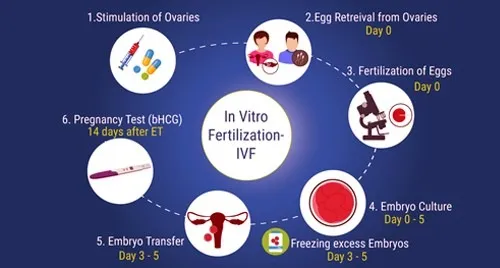
- Involves 5 steps: stimulation → egg retrieval → fertilization → embryo culture → transfer
- One complete IVF cycle takes 4–6 weeks
- Can use your own eggs/sperm or donor eggs/sperm — depending on your diagnosis
- Unused embryos can be frozen for future use
- Success rates at Nisha IVF Centre reach 60% per cycle
Want to understand if IVF is right for you?
Who Needs IVF?
Understanding what is in vitro fertilization also means knowing when it is the right treatment. IVF is recommended for:
- Blocked or damaged fallopian tubes
- Low sperm count or poor sperm motility (male infertility)
- Endometriosis
- Ovarian dysfunction or low ovarian reserve
- Unexplained infertility after 1–2 years of trying
- Recurrent IUI or IVF failure
- Risk of genetic disorders — embryos tested via PGT before transfer
- Women over 35 with declining natural fertility
The 5 Steps of In Vitro Fertilization — Simply Explained
A complete answer to “what is in vitro fertilization” includes understanding each stage of the process:
Step 1 — Ovarian Stimulation Fertility injections are given for 8–14 days to stimulate the ovaries to produce multiple eggs. Progress is tracked via ultrasound and blood tests.
Step 2 — Egg Retrieval A minor procedure under sedation where a thin needle retrieves mature eggs from the ovaries. Takes 20–30 minutes. You go home the same day.
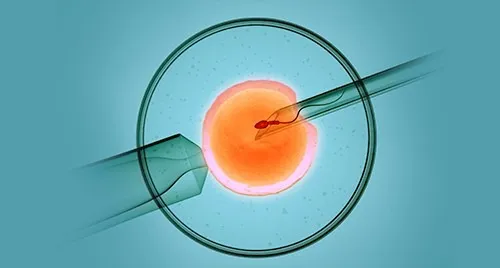
Step 3 — Fertilization Eggs are combined with prepared sperm in a lab dish. If sperm quality is low, ICSI (a single sperm injected directly into the egg) is used instead of standard insemination.
Step 4 — Embryo Culture Fertilized eggs develop in the lab for 3–5 days. The best-quality embryos are selected. Genetic testing (PGT) can be performed at this stage if required.
Step 5 — Embryo Transfer One or two embryos are placed into the uterus via a thin catheter — a quick, painless procedure. A pregnancy blood test is done 14 days later.
Dr. Nisarg Patel explains: “The embryo transfer itself takes just a few minutes. Most patients are surprised by how straightforward it is. The real precision in in vitro fertilization happens in the lab — that’s where quality embryology makes the biggest difference in outcomes.”
IVF With Donor Options
Depending on your diagnosis, in vitro fertilization can be performed using:
| Scenario | Eggs | Sperm |
|---|---|---|
| Standard IVF | Your own | Partner’s |
| Donor Egg IVF | Donor | Partner’s |
| Donor Sperm IVF | Your own | Donor |
| Full Donor IVF | Donor | Donor |
| Surrogacy | Your own or donor | Partner’s or donor |
Connect with an expert
Risks of In Vitro Fertilization
IVF is safe and well-established, but carries some risks patients should be aware of:
- Ovarian Hyperstimulation Syndrome (OHSS) — uncommon; managed with individualized stimulation protocols
- Multiple pregnancies — higher chance if more than one embryo is transferred
- Ectopic pregnancy — rare but possible
- Miscarriage — rates are similar to those in natural conception
- Mild side effects — bloating, cramping, or spotting during stimulation phase
Dr. Nisarg Patel advises: “OHSS is the most common concern patients raise when learning what is in vitro fertilization. At Nisha IVF, we use personalized stimulation protocols — never a one-size-fits-all approach. This significantly reduces the risk for most patients while protecting egg quality.”
What Is In Vitro Fertilization vs. Other Fertility Treatments?
| Treatment | How It Works | Best For |
|---|---|---|
| IUI | Sperm placed directly in uterus | Mild male infertility, unexplained infertility |
| IVF | Egg + sperm fertilized in lab, embryo transferred | Blocked tubes, moderate-severe infertility |
| ICSI | Single sperm injected into egg (part of IVF) | Severe male-factor infertility |
| FET | Frozen embryo from previous IVF thawed and transferred | Second attempt without new stimulation cycle |
Why Patients Choose Dr. Nisarg Patel at Nisha IVF Centre
When deciding where to pursue in vitro fertilization- IVF treatment, here is what sets Nisha IVF Centre in Ahmedabad apart:
- 13+ years of experience in IVF, ICSI, and advanced reproductive medicine
- 8,000+ IVF cycles completed — 60% success rate, among the highest in Gujarat
- Triple fellowship trained — Infertility, ART, and Obstetrics Ultrasound from IKDRC-ITS, Gujarat University
- Advanced lab technology — microfluidics, blastocyst culture, PGT, and freeze-all protocols available
- Personalized stimulation protocols — no two patients receive the same treatment plan
- End-to-end support — from diagnosis through the two-week wait and beyond
Ready to take the first step? Book a consultation with Dr. Nisarg Patel
FAQs
What is in vitro fertilization in simple terms?
IVF is a process where a woman’s eggs and a man’s sperm are combined in a lab to create an embryo, which is then placed into the uterus. It bypasses natural fertilization inside the body and gives fertility specialists full control over the process.
Is in vitro fertilization painful?
The daily injections cause mild discomfort. Egg retrieval is done under sedation so you feel nothing during the procedure. Most women return home within a few hours and resume normal activity the next day.
How many IVF cycles does it usually take to get pregnant?
Many patients succeed in the first cycle. On average, 2–3 cycles are considered. At Nisha IVF Centre, 60% of patients conceive in the first cycle.
What is the difference between IVF and ICSI?
In standard IVF, eggs and sperm are placed together in a dish and fertilization happens naturally. In ICSI, a single sperm is directly injected into the egg. ICSI is recommended for male-factor infertility or previous fertilization failure.
At what age is in vitro fertilization most successful?
Under 35, success rates are highest. After 40, rates decrease naturally, but IVF with your own or donor eggs remains a viable option. Earlier consultation always yields better outcomes.
Can IVF work with low AMH levels?
Yes. Low AMH affects egg quantity, not always quality. A tailored stimulation protocol can still retrieve viable eggs in many cases. Early evaluation is key.
How long does one in vitro fertilization cycle take?
A complete IVF cycle — from the start of stimulation to the pregnancy test — takes approximately 4–6 weeks.