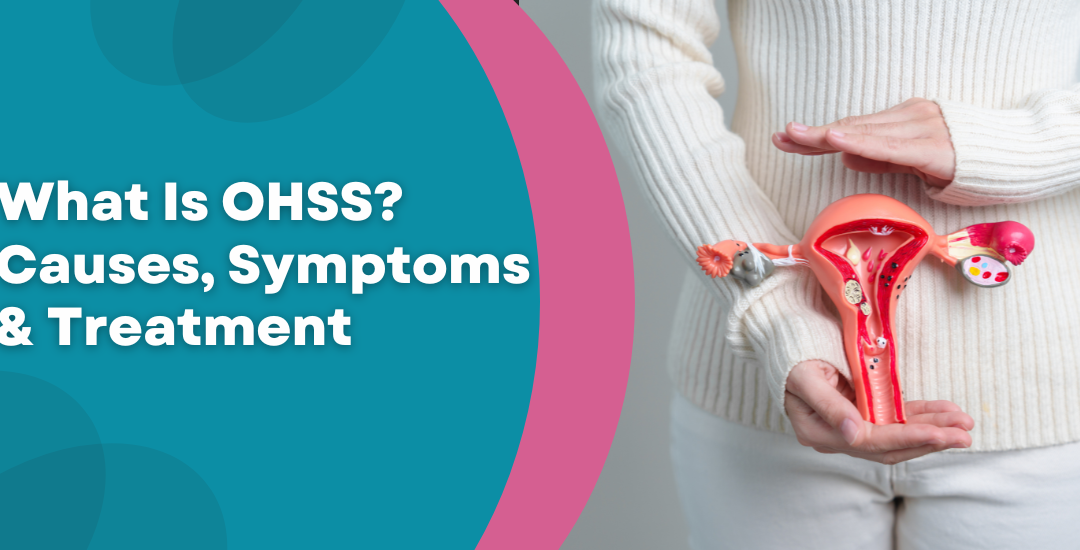
Ovarian Hyperstimulation Syndrome (OHSS) is the body pushing back too hard against fertility drugs, the medicines used to stimulate the ovaries during an IVF cycle. The aim is to grow several eggs at once for retrieval, and in most women that happens cleanly. In some, the ovaries overshoot. Fluid leaks out of the blood vessels into the abdomen, and symptoms set in: bloating, swelling, nausea, a heavy ache. Most cases stay mild and settle on their own within days, while the severe ones are rare but move fast and need hospital-level care. Mild versus severe? That often comes down to how early the risk was spotted.
According to Dr. Nisarg Patel, a leading Best IVF Centre in Ahmedabad, OHSS is mostly preventable, but the prevention starts before the trigger shot, not after the symptoms appear. Knowing which patient is at risk is what actually changes the outcome.
Wondering if you’re more at risk of OHSS before a cycle even begins?
What Causes Ovarian Hyperstimulation Syndrome and Who Is at Risk?
- It mostly comes down to hCG. That’s the hormone in the trigger shot, the one that matures the eggs before they are collected.
- After the shot, the overworked ovaries release chemicals that dilate the blood vessels. Fluid escapes into the abdomen. In the worst cases, it reaches the chest.
- All that escaped fluid is what you feel as bloating, swelling, and ache.
- Some women carry more risk than others. The younger ones. The leaner ones. Women are growing a big crop of follicles, or running high estrogen through stimulation.
- PCOD-type hormones are a particular warning sign.
- Falling pregnant in the same cycle can tip things further, because then the body makes hCG of its own.
The whole thing traces back to how hard the ovaries were pushed, which is why careful ovulation induction and follicular monitoring is where safe treatment really starts.
What Are the Signs, Symptoms, and Grades of OHSS?
- Timing tells you a lot: Early OHSS turns up inside a week of the hCG shot and usually points to a strong ovarian response. Late OHSS comes later, ten days or more out, is normally linked to a pregnancy that has just started, and is the tougher of the two: harder symptoms, longer duration.
- Mild cases: bring a bloated feeling, slight swelling, some nausea, the waistline up a notch. Nothing alarming.
- Moderate: is more than that: belly pain that lingers, nausea with vomiting, headaches, less urine, and fluid (ascites) a scan can pick up in the abdomen.
- Severe: is the one to worry about. Sharp abdominal pain, intense thirst, dehydration, dark and scanty urine, breathlessness, a visibly distended abdomen, leg swelling from clots, and weight gain within a single day.
- Breathlessness, severe pain, or rapid weight gain after fertility medication? Call your clinic right away. Don’t sit on it.
Women already under care for female infertility in Ahmedabad are kept under close watch, so the early signs seldom go unnoticed.
How Is OHSS Diagnosed, Prevented, and Managed?
Diagnosis of OHSS
- No lab test settles it on its own. The doctor pieces it together.
- They weigh the timing against the trigger date, the follicle and egg count, whether embryos were transferred, and any PCOS in the history.
- The exam looks for dehydration, swelling, fluid in the belly, and shifts in breathing.
- Bloods might cover a full blood count, haematocrit, electrolytes, liver function, and clotting, alongside an ultrasound to measure the ovaries and spot fluid.
- Worried about the lungs or clotting? Then a chest X-ray and a couple more tests get ordered.
Preventing OHSS
- Nearly all of it is decided before the trigger ever goes in, and catching a high-risk patient early matters more than anything else.
- For those patients, the dose can be reduced, or the standard hCG trigger can be replaced with a GnRH agonist.
- Freezing every embryo is another route, parking them for a quieter cycle down the line.
- Moves like these are the reason severe OHSS has grown rare wherever cycles are run with care.
- PCOD weighs heavily on the risk, so getting your head around how PCOD affects infertility makes a gentler stimulation easier to plan from the outset.
Managing OHSS
- The treatment tracks the severity, nothing more complicated than that.
- Mild to moderate? Rest, fluids, painkillers, and a bit of monitoring to confirm it is easing.
- Severe means admission, IV fluids, and sorting out the salt and blood-thickening problems.
- If fluid floods the abdomen, it gets drained off.
- The thing about OHSS is that it resolves with time, so treatment is really about keeping the patient steady and comfortable while the body sorts itself out.
Why Choose Dr. Nisarg Patel at Nisha IVF Centre?
Dr. Nisarg Patel holds an MBBS and MS in Obstetrics and Gynaecology, with Fellowships in Infertility, IVF, and Obstetric Ultrasound. Over thirteen years in clinical practice and 8,000+ IVF cycles behind him. He’s also a “Gujarat Pioneers 2020” awardee and a recognised IVF specialist with a practice footprint across Gujarat, Rajasthan, and Nepal.
With OHSS, the edge is in the watching. Every patient is screened for risk before the trigger goes in, doses are matched to the individual, and once the risk climbs, freeze-all and GnRH trigger plans take over. Stimulation here doesn’t run off a fixed template. It runs on how each woman’s ovaries actually respond.
Want your stimulation in the hands of an experienced Ahmedabad specialist from day one?
FAQs
How long does OHSS last?
Without a pregnancy, mild OHSS usually settles within a week or so. Conceive in the same cycle, though, and it can hang around longer, a couple of weeks in some cases, since the body keeps producing hCG.
Is in vitro fertilization painful?
The daily injections cause mild discomfort. Egg retrieval is done under sedation so you feel nothing during the procedure. Most women return home within a few hours and resume normal activity the next day.
How many IVF cycles does it usually take to get pregnant?
Many patients succeed in the first cycle. On average, 2–3 cycles are considered. At Nisha IVF Centre, 60% of patients conceive in the first cycle.
Does OHSS affect future IVF cycles?
One episode doesn’t rule out trying again. It’s a signal, really, telling the doctor to ease off next time, often with a different trigger or a freeze-all plan.
Is OHSS dangerous for the baby?
Mild and moderate OHSS usually leaves the baby alone. Severe OHSS gets treated fast for the mother’s sake, because the real threats, dehydration and clots, are about her, not the pregnancy.
Can IVF work with low AMH levels?
Yes. Low AMH affects egg quantity, not always quality. A tailored stimulation protocol can still retrieve viable eggs in many cases. Early evaluation is key.
When should I contact my fertility doctor after IVF?
Call your clinic if you hit severe belly pain, struggle to breathe, can’t stop vomiting, notice far less urine, or pile on weight suddenly in the days after the trigger or egg collection. Early is everything here.