
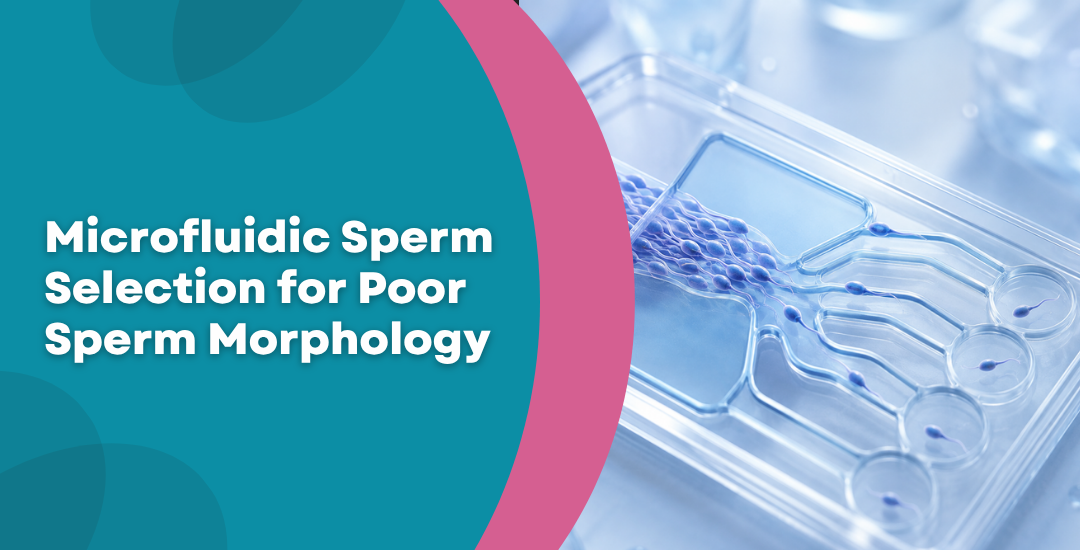
Microfluidic sperm selection can meaningfully improve outcomes for couples where poor sperm morphology (teratozoospermia) is the main barrier to fertilization, particularly when combined with ICSI. The technique selects sperm by letting them swim through narrow microchannels rather than spinning the whole sample in a centrifuge, which naturally filters out sperm with damaged DNA, abnormal shape, or poor motility. Studies comparing it to standard density gradient centrifugation (DGC) show it can raise fertilization rates and blastocyst quality, though the improvement isn’t guaranteed in every case — it depends on how severe the morphology defect is and what’s actually driving it.
According to Dr. Nisarg Patel, IVF specialist, sperm morphology reports often look worse than they actually are on their own — what matters more is whether the abnormal shape comes with high DNA fragmentation, because that’s the piece that actually affects embryo quality.
Wondering if microfluidic selection is right for your cycle?
When does poor sperm morphology actually need microfluidic selection?
Not every abnormal morphology report needs a different sperm prep method. It becomes relevant once morphology drops low enough to affect fertilization, or when standard IVF/ICSI cycles have already underperformed.
| Situation | Why microfluidic selection is considered |
| Severe teratozoospermia (normal forms very low) | Standard prep can’t reliably separate healthy sperm from damaged ones |
| High sperm DNA fragmentation on testing | Microfluidic channels favour intact, low-fragmentation sperm |
| Prior fertilization failure with ICSI | Points to a sperm-quality issue standard prep didn’t catch |
| Normal semen analysis but repeated IVF failure | Morphology and motility on paper don’t always reflect DNA quality |
| Combined male and female factor cases | Every improvable variable matters when the female side already limits odds |
How it’s different from standard sperm prep. Conventional preparation (density gradient centrifugation or swim-up) relies on spinning and layering the sample, which involves pipetting and centrifugal force that can itself add DNA damage to already fragile sperm. Microfluidic chips skip that step — sperm actively swim through microscopic channels toward a collection chamber, and only the ones with good motility and structural integrity make it through.
Where it fits in the treatment plan. It’s used at the sperm preparation stage, right before ICSI — it doesn’t replace ICSI, it changes how the sperm sample is prepared beforehand. It’s typically offered after semen analysis and DNA fragmentation testing point to sperm quality as the limiting factor, rather than as a default first step for every couple.
What does the research actually show?
The honest answer is: real benefit, but not a guaranteed one — and it depends what you’re measuring.
- Sperm quality improves fairly consistently. Across studies comparing microfluidic selection to density gradient centrifugation, the selected sperm reliably shows lower DNA fragmentation, and better morphology and motility. That part of the picture is well supported.
- Fertilization and embryo quality often improve too. A study specifically on severe teratozoospermia found microfluidic-selected sperm led to statistically better fertilization rates and blastocyst quality than DGC. A separate study on couples with prior fertilization failure found the same pattern — better morphology, lower DNA fragmentation, and improved fertilization after switching to microfluidic selection.
- But not every trial agrees on pregnancy outcomes. At least one comparative study found no significant difference in fertilization rate between microfluidic selection and standard gradient centrifugation, even though DNA fragmentation improved in the microfluidic group — a reminder that a cleaner sperm sample doesn’t automatically translate into a proportionally higher pregnancy rate in every population or clinic.
- Bottom line for couples. It’s most worth considering when morphology or DNA fragmentation testing points to sperm quality as the actual bottleneck — not as a blanket upgrade applied to every ICSI cycle regardless of semen parameters.
Why Choose Dr. Nisarg Patel?
Dr. Nisarg Patel is an MBBS and MS in Obstetrics and Gynaecology, with Fellowships in Infertility, IVF, and Obstetric Ultrasound, plus a Diploma in Advanced Gynaec Endoscopy. Over 10 years of clinical work and more than 8,000 IVF cycles handled, including male factor cases where sperm selection technique made the difference between fertilization failure and a viable embryo. He’s a “Gujarat Pioneers 2020” awardee and an experienced IVF specialist practising across Gujarat, Rajasthan, and Nepal.
Sperm selection method is chosen based on semen analysis, DNA fragmentation testing, and prior cycle history — not applied as a blanket upgrade for every patient.
FAQs
Does microfluidic sperm selection replace ICSI?
No, it’s a sperm preparation method used before ICSI, not a replacement for it.
Is microfluidic selection only for severe morphology issues?
It’s most useful in severe cases or after unexplained fertilization failure, but it can also help when DNA fragmentation is high despite normal-looking morphology.
Does microfluidic sperm selection guarantee better pregnancy rates?
No. It generally improves sperm DNA quality and fertilization in studies, but results vary by case and it isn’t a guarantee.
Is the procedure different for the male partner?
No, sample collection is the same as any IVF/ICSI cycle; the difference is entirely in how the lab processes the sample afterward.
Refrence
- NCBI – Sperm Selection Using Microfluidic Techniques Significantly Decreases Sperm DNA Fragmentation
Disclaimer:
This content is published for educational and informational purposes only.