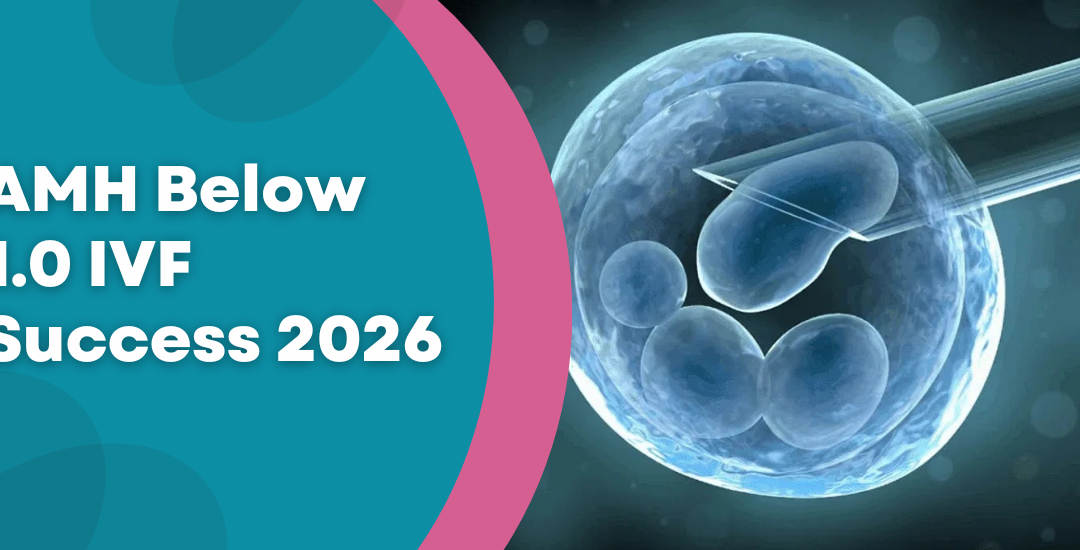
Yes, you can do IVF successfully in 2026 with an AMH level below 1.0 ng/mL. Low AMH indicates reduced ovarian reserve, meaning fewer eggs, but it doesn’t determine egg quality, which depends more on age than AMH. Success rates stay between 20–35% per cycle for women under 35 with AMH in the 0.5–1.0 range. Customized protocols like antagonist cycles, mini-IVF, DuoStim, and in-vitro maturation are what make the difference. The AMH number sets the stimulation plan, not the final outcome.
According to Dr. Nisarg Patel, IVF treatment, A low AMH tells me how aggressive my stimulation plan needs to be, not whether the patient will ever conceive I’ve seen AMH 0.3 patients walk out pregnant after one modified cycle.
AMH under 1.0 and told IVF won't work?
What does AMH below 1.0 actually mean for IVF planning?
Low AMH changes the stimulation map. It doesn’t lock the door.
- Egg count: Fewer eggs retrieved per cycle, usually in the 2-6 range depending on age and antral follicle count together.
- Egg quality:AMH doesn’t measure quality, so a 32-year-old with AMH 0.7 often has chromosomally normal eggs worth fertilising.
- Protocol shift: Conventional long protocols rarely work, and that’s why antagonist or mini-IVF with added growth hormone becomes the first pick.
- Cycle cancellation: Around 12-18% of cycles get cancelled before retrieval when AMH sits under 0.5, though repeat attempts recover ground.
Multiple cycles are often needed, and that’s okay. ICSI treatment pairs well with low-AMH IVF because every retrieved egg counts.
Which IVF protocols work best for women with AMH below 1.0?
Not every protocol fits every low-AMH patient. The right one depends on age, past response, and follicle count.
- Antagonist: Short, flexible, and gentle on the ovaries, it’s the default starting point for most women with AMH under 1.0 because cycle length stays manageable.
- Mini-IVF: Lower gonadotropin doses combined with oral medication focus on fewer but healthier eggs, and many women prefer this when they’ve already failed one conventional cycle.
- DuoStim: Two stimulations inside a single menstrual month double the chance of getting enough embryos, often used with our egg freezing process to bank embryos faster.
- Natural IVF: For AMH below 0.3, chasing one good egg per month sometimes beats pushing the ovaries hard.
Adjuncts like DHEA, CoQ10, and growth hormone are layered in when response stays weak. Real outcomes speak louder than numbers here’s an unexplained infertility case study of a patient with AMH 0.6 who conceived through IVF.
Why Choose Dr. Nisarg Patel?
Dr. Nisarg Patel is the Director and lead IVF Specialist at Nisha IVF Centre, Ahmedabad, bringing over a decade of experience, 8,000+ IVF cycles managed, and a 60% success rate across diverse fertility challenges learn more about Dr. Nisarg Patel and his team’s approach to poor responders.
His clinical focus stays on women dismissed by other clinics low AMH, previous failed cycles, advanced maternal age. The plan is built around your response pattern, not a template. No false promises. Just protocols that match what your ovaries can actually do.
Is AMH below 1.0 considered very low?
It’s classified as diminished ovarian reserve but still treatable with the right protocol.
Can AMH levels improve over time?
No, AMH generally declines with age and can’t be raised significantly through supplements.
What's the minimum AMH for IVF to be attempted?
There is no strict cutoff, and patients with AMH as low as 0.16 have achieved pregnancy.
Does low AMH mean poor egg quality?
Not necessarily, since egg quality correlates more closely with age than AMH numbers.